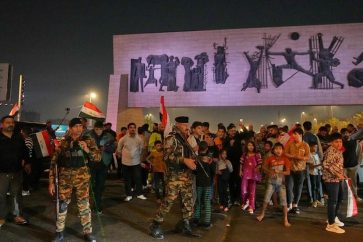

Iraqis began casting ballots on Tuesday in parliamentary elections that will shape the country’s political scene for the next four years.
Approximately 21 million voters are eligible to cast ballots to elect members of the 329-seat parliament, which will elect the president and grant confidence to the government.
7,744 candidates are running for the polls, which will close at 6 pm local time (1500GMT) with no extensions.
Watch Press TV’s live coverage from polling stations in Baghdad.
So far, no issues have been reported during the ballot-casting process, with the Iraqi Prime Minister confirming that the election is taking place in a secure environment.
Follow https://t.co/B3zXG74hnU pic.twitter.com/1fUP2x91z8
— Press TV 🔻 (@PressTV) November 11, 2025
The results of the elections are scheduled to be announced within 24 hours of the vote and will be officially confirmed after appeals are examined.
Observers believe that the upcoming election could be a turning point in the political process towards consolidating the foundations of democracy and renewing trust in elected institutions, in light of the country’s ongoing efforts to achieve stability and reform.
Meanwhile, observers also expect that the post-election political landscape will see a fragmentation in the distribution of votes and seats, making it highly similar to the traditional formula that allocates key government positions to different ethnic-religious groups.
Analysts opine that the increase in the number of candidates in this vote, with the diversity and multiplicity of lists, will make the idea of a “dominant main list” far from reality.
The last legislative elections in Iraq were held on October 10, 2021, two years after widespread protests forced former Prime Minister Adil Abdul-Mahdi to resign. Mustafa Al-Kadhimi succeeded him and oversaw the elections.
The current parliament, dominated by Shia parties and blocs, began its term on January 9, 2022, for four years to end on January 8, 2026.
Under Iraqi law, legislative elections must be held at least 45 days before the end of the parliament’s term.
Iraq’s three branches of government are traditionally divided by sect: the presidency goes to Kurds, the prime ministry to Shias, and the parliamentary speaker to Sunnis, ensuring all segments of society are represented in government.
Major Players
This election will see a powerful Shia bloc headed by former Prime Minister Nouri Al-Maliki run in the elections as well as a coalition headed by the current leader, Mohammed Shia Al-Sudani.
The latter is aiming to secure a second term as prime minister, yet analysts believe his chances are slim due to deep divisions within the Shia Coordination Framework (SCF), which is the principal Shia political bloc.
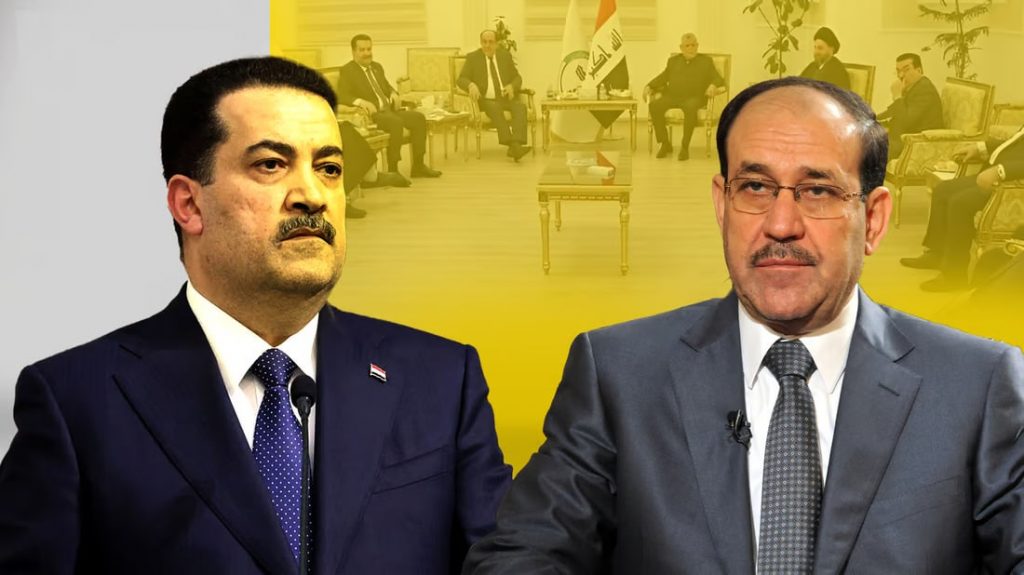
The SCF was formed in 2021 and appointed Al-Sudani as prime minister in 2022.
Meanwhile, the main Sunni political force running in the elections is the Taqaddum (Progress) Party, headed by parliamentary Speaker Mohamed Al-Halbousi. His party’s supporters mainly hail from Sunni heartlands in the west and north of the country.
The major Kurdish parties competing in the elections are the Kurdistan Democratic Party, which is trying to secure larger shares of oil reserves to boost the budget in the semiautonomous Kurdish region of Iraq.
The rival Patriotic Union of Kurdistan (PUK), which favors closer relations with the government in Baghdad, will also be competing for seats and influence.
Source: Agencies (edited by Al-Manar)